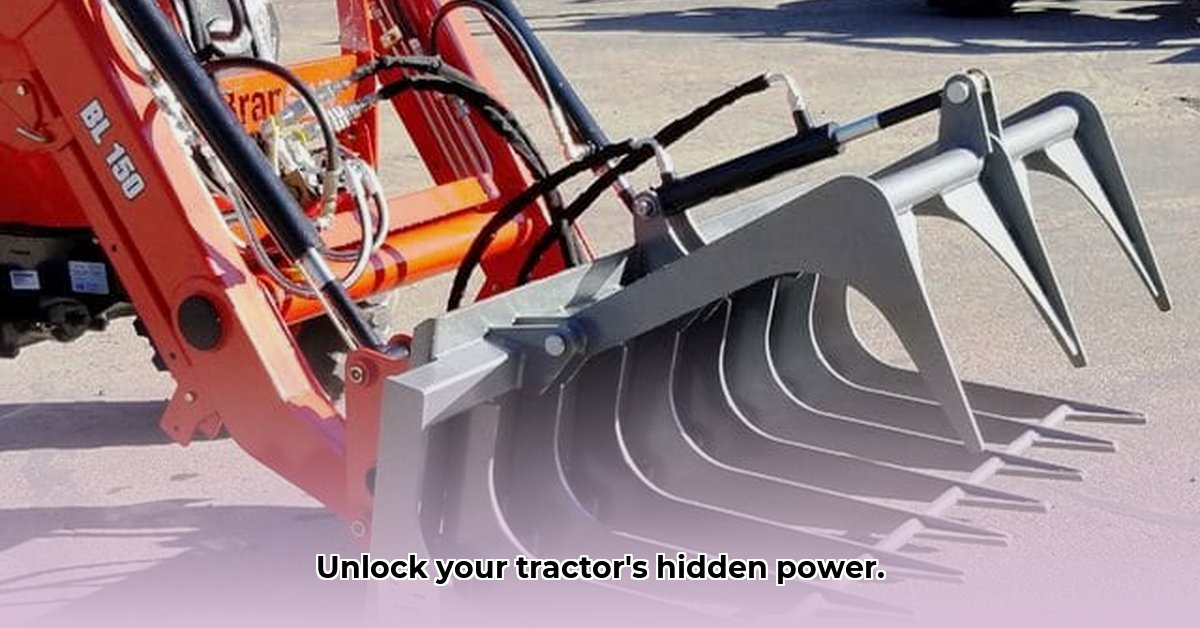
Understanding Tractor Grapple Attachments
Choosing the right tractor grapple attachment can significantly improve your farm's efficiency and productivity. This guide helps you select, operate, and maintain grapples sustainably, focusing on two main types: root rakes and claw grapples. These attachments are invaluable for moving various materials, from hay bales to logs, but understanding their differences is crucial for maximizing their effectiveness. For more in-depth information, check out this helpful guide: Tractor Grapple Guide.
Types of Tractor Grapples: Root Rakes and Claw Grapples
The choice between a root rake and a claw grapple depends largely on the tasks you perform most frequently.
Root Rakes: These grapples resemble large scoops with multiple tines, ideal for gathering and moving large volumes of loose materials like hay, brush, or soil. Their design allows for quick and efficient material handling in high-volume applications. However, they lack the precision of claw grapples for handling irregularly shaped items. Tine geometry (spacing and shape) is critical and greatly impacts efficiency. Material selection, often high-strength steel like Hardox (a wear-resistant steel), is a trade-off between durability and cost.
Claw Grapples: Claw grapples function like mechanical hands, using multiple claws to grip and lift individual items. This offers greater precision and control, making them suitable for handling irregularly shaped materials such as logs, rocks, or large, oddly-shaped bales. They are less efficient for handling large volumes of loose materials compared to root rakes. Material selection and overall design impact strength and durability. Higher-strength materials are more expensive but offer longer lifespans.
Choosing the Right Grapple for Your Farm
Selecting the right grapple requires careful consideration of several factors:
1. Farm Size and Type of Operation: Small farms might only need a smaller, more maneuverable grapple, while large-scale operations benefit from larger capacity models to increase efficiency. The types of crops or livestock also influence your needs. For example, a hay farm will need a grapple optimized for handling large hay bales.
2. Budget: Grapple prices vary widely depending on size, material, and features. Consider the initial investment and long-term maintenance costs, as well as the potential return on investment (ROI) in terms of time and labor saved. A more durable, higher-priced grapple might save money in the long run due to reduced repair needs.
3. Specific Tasks: This is the most critical factor. If the primary task is moving logs, a claw grapple's precision is crucial. For handling large quantities of hay or brush, a root rake's high capacity is better suited. Understand your routine tasks for the best match.
Operational Guidelines: Safe and Efficient Operation
Safe and efficient operation is paramount.
Attachment and Detachment: Always follow the manufacturer’s instructions for proper attachment to the tractor’s three-point hitch. Ensure all pins are securely inserted and locked before operating. Reverse these steps for detachment.
Safe Operating Procedures: Maintain slow, controlled movements, and always be aware of your surroundings. Never exceed the grapple's weight capacity, and understand and utilize emergency shut-off mechanisms.
Maintenance and Upkeep: Regular lubrication, inspections for wear and tear and prompt repairs are essential for maintaining grapple performance and extending its lifespan. Proper maintenance significantly reduces the risk of accidents and premature failure.
Sustainability Considerations: Environmental Impact
Sustainable practices are critical in modern farming.
Material Sourcing: Prioritize grapples made from recycled or sustainably sourced materials to reduce the environmental footprint of production.
End-of-Life Management: Choose grapples with readily available recycling or responsible disposal options to minimize waste and environmental impact.
Fuel Efficiency: An efficiently designed grapple minimizes fuel consumption, reducing emissions and operating costs. Consider lighter grapples when possible to reduce the overall fuel required to operate your equipment.
Future Trends in Grapple Technology
Ongoing advancements in materials science and design are continually improving grapple efficiency and durability. Expect innovations in lighter yet stronger materials, creating more fuel-efficient designs. Research into standardized performance metrics holds the potential to streamline the selection process for farmers.
Conclusion: Embracing Sustainable Efficiency
Choosing the appropriate tractor grapple attachment significantly impacts your farm's productivity, efficiency, and sustainability. By carefully considering factors like your operation, budget, and specific tasks, you can make an informed decision that optimizes your workflow and minimizes environmental impact. Sustainable practices ensure a healthier planet and a more profitable farm.